
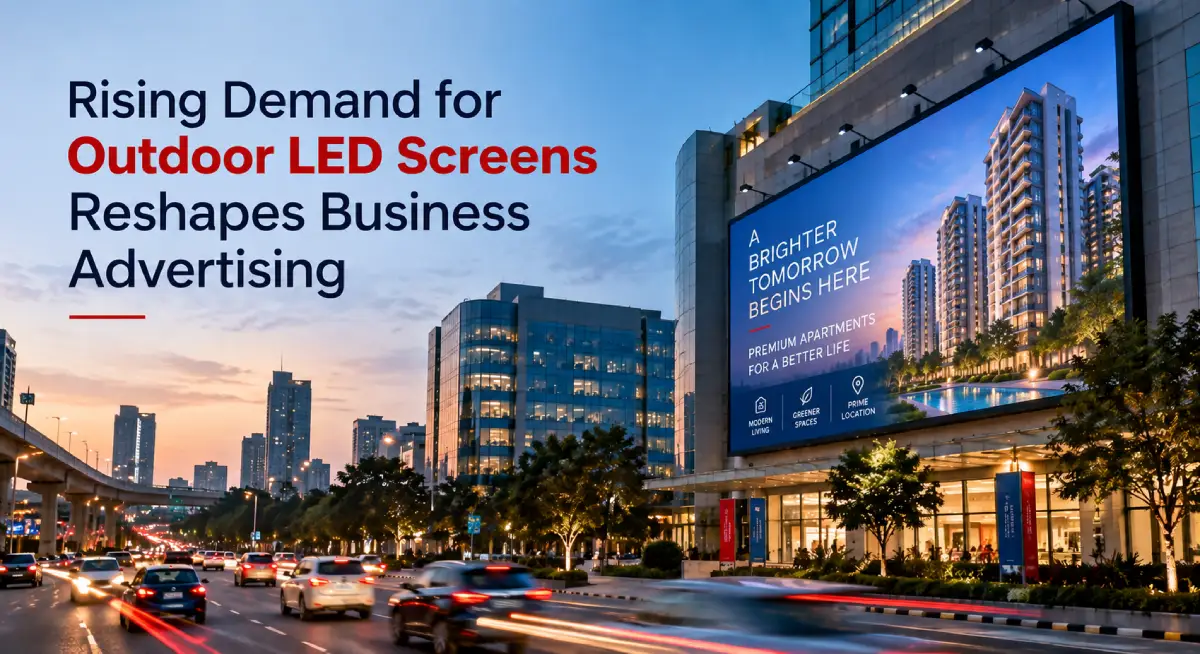
Outdoor advertising is changing as businesses look for more engaging ways to capture attention in busy commercial environments. Outdoor LED screens are becoming an increasingly popular choice because they allow brands to display bright, dynamic and frequently updated advertising content. Unlike traditional printed billboards, LED displays can support videos, animations, promotional campaigns and multiple advertisements on the same screen.
This shift is particularly visible across commercial areas, shopping destinations, entertainment zones and high-traffic roads in Bangalore, where businesses compete for attention throughout the day. LED sign boards for retail stores are increasingly being used to create prominent storefront visibility and attract customers.
How Outdoor LED Screens Are Changing Business Advertising?
Outdoor LED screens are giving businesses greater flexibility in how they communicate with customers. An LED display board outdoor solution allows brands to schedule different campaigns and update their messaging based on promotions, events, seasons or changing business requirements.
Outdoor LED Screens Transform Brand Visibility
A large, high-brightness LED display can create a strong visual presence in locations with heavy pedestrian and vehicle movement. Businesses working with LED video wall companies can leverage the combination of screen size, brightness, motion and vibrant imagery to make advertising content stand out against the surrounding environment.
Key advantages include:
- High visibility: Bright LED displays remain prominent across different outdoor conditions.
- Dynamic content: Businesses can use videos, animations, product visuals and promotional messages.
- Flexible advertising: Multiple campaigns can be scheduled on a single screen.
- Real-time updates: Content can be changed without replacing physical advertising material.
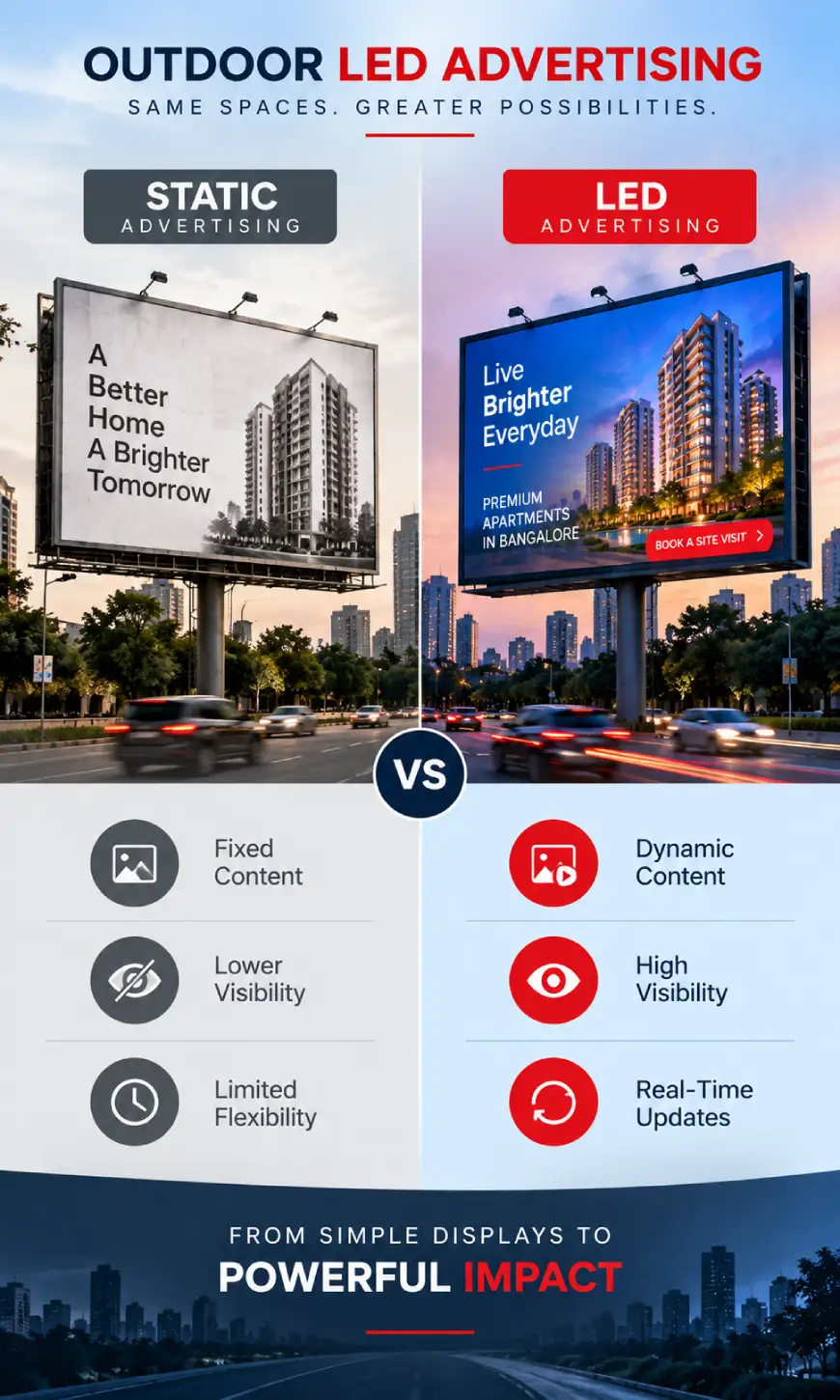
- Stronger visual impact: Motion and vibrant colours can attract attention more effectively than static displays.
- Long-term usability: The same LED installation can support different campaigns over an extended period.
For businesses investing in outdoor digital advertising, screen size, pixel pitch, brightness, viewing distance and installation location all play an important role in determining the effectiveness of the display.
Why Businesses Are Moving Beyond Static Advertising
Traditional static advertising continues to have its place, but businesses increasingly want advertising formats that can adapt to changing marketing requirements. Outdoor LED screens provide this flexibility while creating opportunities for more visually engaging campaigns.
The move towards digital outdoor advertising is being driven by several factors:
- More engaging content: Video, animation and changing visuals can create a stronger advertising experience.
- Multiple campaigns: Different advertisements can be displayed at scheduled times on the same LED screen.
- Faster content changes: Businesses can update promotional messages without printing and installing new advertising material.
- Better campaign flexibility: Content can be adjusted for festivals, product launches, sales, events and seasonal promotions.
- Modern brand presentation: Digital displays can give commercial locations a more contemporary and technology-driven appearance.
As businesses continue to explore more flexible advertising formats, outdoor LED advertising screens are becoming an important part of modern brand communication. Their ability to combine large-format visibility with dynamic digital content makes them suitable for retail brands, property developers, hospitality businesses, corporate spaces, entertainment venues and other commercial applications.
Growing Applications of Outdoor LED Advertising Screens
Outdoor LED advertising screens are being used across a wide range of commercial environments where businesses need high visibility and flexible content. From retail promotions to corporate branding, LED displays allow businesses to communicate messages through bright visuals, videos and changing campaigns.
| Application | Typical Use |
|---|---|
| Retail | Promotions, product launches and seasonal campaigns |
| Commercial Buildings | Brand advertising and corporate communication |
| Hotels & Resorts | Guest information, promotions and announcements |
| Events | Live content, sponsorships and event branding |
| Roadside Advertising | High-visibility commercial campaigns |
LED Technology Enhances Modern Advertising Campaigns
Modern LED technology gives advertisers greater control over how their content appears and when it is displayed. A single screen can accommodate multiple campaigns, allowing businesses to make better use of valuable advertising space.
Key advantages include:
- Dynamic visual content through videos, animations and graphics
- Scheduled campaigns for different times of the day
- Real-time content updates without replacing physical signage
- High brightness and visibility for outdoor environments
- Multiple advertisements displayed through one installation
- Flexible branding for promotions, launches and special events
This makes LED advertising particularly useful for brands that frequently change their messaging or want to create a stronger visual presence in busy locations.
Choosing the Right Outdoor LED Screen for Your Business
Selecting an outdoor LED screen requires consideration of the installation location, audience and intended advertising content. The right combination of screen specifications and installation design can improve visibility while ensuring the display performs reliably in outdoor conditions.
Outdoor LED Screens for Retail and Commercial Spaces
Retail stores, shopping destinations, commercial buildings and property developments can use outdoor LED screens to attract attention and communicate information to visitors and passersby.
Important considerations include:
- Identify the viewing distance to determine the appropriate pixel pitch.
- Assess the available installation area before deciding the screen dimensions.
- Consider ambient lighting when selecting screen brightness.
- Plan the content format around the type of advertisements being displayed.
- Evaluate structural requirements for safe and stable outdoor installation.
Key Factors That Influence LED Screen Selection
| Factor | Why It Matters |
|---|---|
| Pixel Pitch | Influences image sharpness and suitable viewing distance |
| Brightness | Helps maintain visibility in bright outdoor conditions |
| Screen Size | Determines overall visibility and advertising impact |
| Viewing Distance | Helps establish the appropriate display specifications |
| Weather Protection | Supports reliable performance in outdoor environments |
The Future of Outdoor Digital Advertising in Bangalore
Bangalore’s expanding commercial spaces, retail destinations, corporate developments and high-traffic areas create strong opportunities for digital outdoor advertising. As businesses look for more engaging ways to communicate with audiences, outdoor LED screens can provide a flexible platform for displaying promotional campaigns, brand messages and visual content.
The combination of large-format visibility, dynamic content and flexible campaign management is making LED technology an increasingly important part of modern outdoor advertising.
Frequently Asked Questions
Outdoor LED screens offer dynamic content, brighter visuals and the flexibility to change multiple advertisements without physically replacing printed displays.
Large, bright displays with motion-based content can attract attention from pedestrians and passing vehicles, helping brands create a stronger visual presence.
Available installation space, viewing distance, traffic conditions, content requirements and the desired advertising impact should be considered before selecting the screen size.
Yes. Commercial-grade outdoor LED displays can support scheduled content throughout the day, allowing businesses to run multiple campaigns and update messaging when required.
Businesses should evaluate pixel pitch, brightness, screen dimensions, viewing distance, structural requirements, weather protection, electrical infrastructure and content management.