
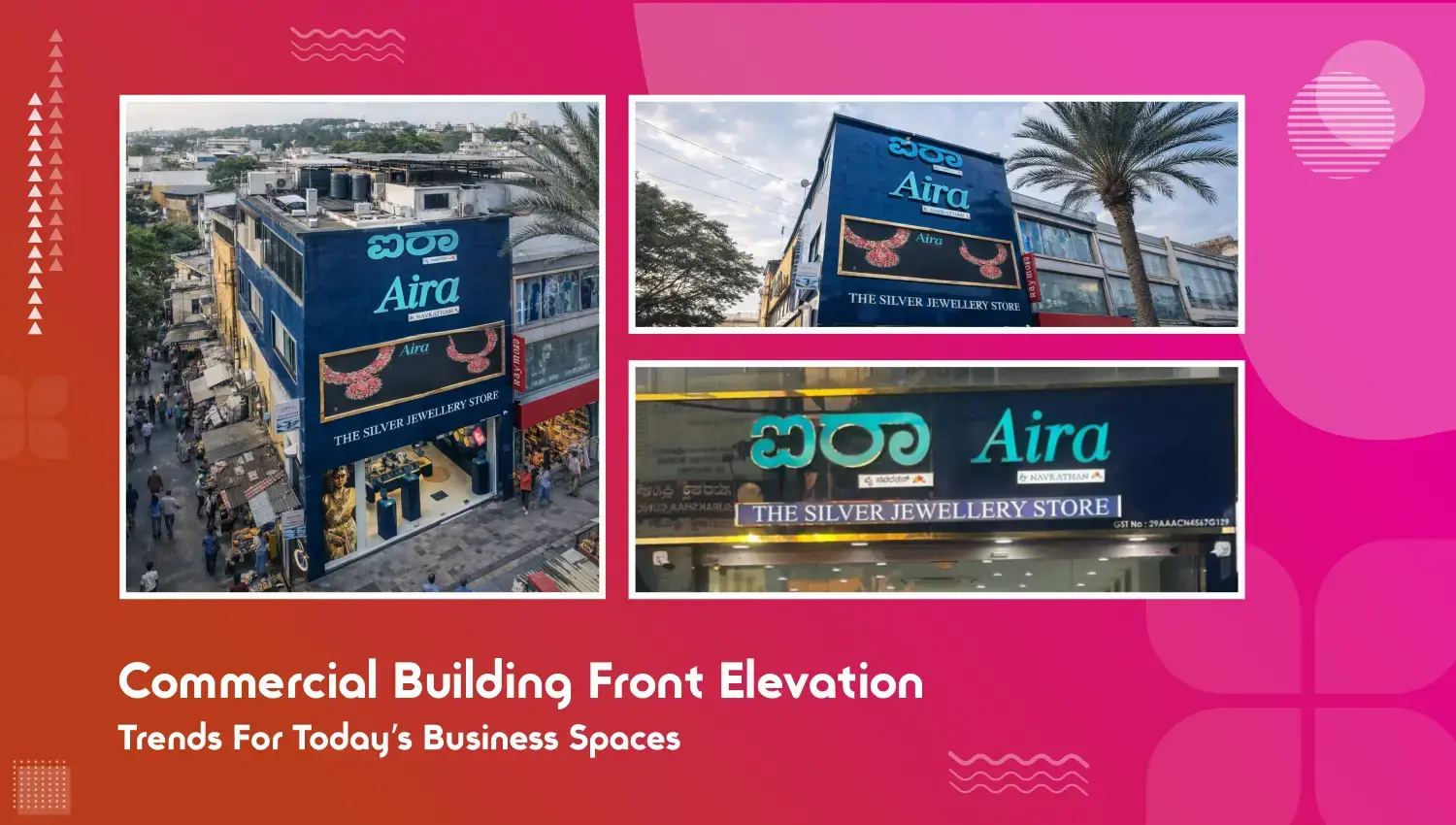
Why Commercial Building Front Elevation Matters in Modern Architecture
A commercial building front elevation is no longer just about exterior appearance. It plays a major role in brand perception, customer attraction and long-term property value. For offices, retail outlets and malls, the elevation often becomes the first point of interaction with customers and visitors.
A well-planned commercial elevation, balances aesthetics with functionality, ensuring visibility, durability and compliance with urban design norms.
Key Design Trends in Commercial Elevation
Modern commercial elevation design focuses on simplicity, visibility and long-term performance. Clean lines, balanced proportions and smart material combinations such as glass, ACP and metal panels are widely preferred.
Clean and Minimal Facade Design
Modern commercial facade design is moving towards clean lines, neutral colour palettes and uncluttered surfaces. Minimal designs not only look premium but also age better over time and require less maintenance.
Materials like ACP panels, glass and metal finishes are commonly used to achieve a contemporary look.
Use of Glass for Openness and Visibility
Glass-based commercial elevations are increasingly popular, especially for corporate offices and retail spaces. Large glass sections improve natural lighting and enhance visibility from the outside.
In shopping complexes and gyms, transparent facades help showcase interiors and attract walk-in customers.
Shopping Mall Elevation Design Trends
Designers mix bold forms, layered textures, glass, metal and sustainable materials to create eye‑catching shopping mall elevation that also resist weather and wear. Strategic lighting and brand zones further boost visibility, especially after dark, making the mall inviting and memorable.
Bold Facades That Attract Footfall
A shopping mall elevation is designed with one primary goal which is attention. Modern mall elevations often use bold forms, layered structures and illuminated elements to stand out, especially in high-traffic urban areas.
LED highlights, digital signage board integration and branding zones are now common features in mall facade design.
Blending Aesthetics with Practicality
While visual appeal is important, mall elevations must also handle weather exposure. Durable materials and easy-to-maintain finishes are now a priority in commercial facade design for malls.
Material Choices for Commercial Facade Design
Glass, ACP panels, stone cladding, metal sheets and textured finishes are commonly used to balance aesthetics, strength and maintenance needs. Modern material choices also improve energy efficiency, weather resistance and long-term performance, making them ideal for high-traffic commercial buildings.
ACP, Glass and Metal Panels
Aluminium Composite Panels (ACP) remain a preferred choice due to their flexibility, cost-effectiveness and modern appearance. Combined with glass and metal elements, they allow architects to create dynamic commercial elevations.
Sustainable and Low-Maintenance Materials
There is growing interest in sustainable facade materials that reduce heat gain and energy consumption. Smart material selection helps businesses lower long-term maintenance and operational costs.
Planning a Commercial Elevation the Right Way
A successful commercial elevation requires seamless coordination between architectural design, branding, structural planning, and execution. Key factors such as location visibility, building function, facade materials, signage integration and lighting strategy must be planned together from the early design stage. Signboards Maker now brings an end-to-end approach to commercial building elevation covering elevation planning, facade detailing, material selection, branding integration, and professional installation. By handling both design intent and on-ground execution, Signboards Maker ensures the elevation works as a unified system, delivering visual impact, structural reliability and long-term value for commercial properties.